40 dot diagram of oxygen
(d) Xenon can react with oxygen and fluorine to form compounds such as XeO 3 and XeF 4. In the boxes provided, draw the complete Lewis electron-dot diagram for each of the molecules represented below. XeO 3 XeF 4 One point is earned for each correct Lewis electron-dot diagram. Omission of lone pairs of electrons on the O or F atoms A step-by-step explanation of how to draw the O2 Lewis Dot Structure (Diatomic Oxygen).Note that Diatomic Oxygen is often called Molecular Oxygen or just Oxy...
The two letter O's in the O2 Lewis structure represent the nuclei (centers) of the oxygen atoms. Is Na2O Lewis dot structure? For Na2O Lewis Structure, place two Sodium atoms using its Chemical Symbol and its valence electron. Now place one Oxygen atom with its valence electrons near the Sodium atom.

Dot diagram of oxygen
The dot and cross diagram shows that a water molecule is made up of one oxygen atom joined to two hydrogen atoms, so the formula of water is H 2 O. Double and triple bonds Each oxygen in the SiO2 lewis dot structure contains two lone pairs of electrons and 2 bonding pairs of electrons whereas silicon has zero lone pairs and 4 bonding pairs of electrons same as the CO2 lewis diagram. Why SiO2 is non-polar? As we already discussed, SiO2 is non-polar because of three main reasons- (a). Lewis Structure Examples. The Lewis electron dot structures of a few molecules are illustrated in this subsection. 1. Lewis Structure of CO2. The central atom of this molecule is carbon. Oxygen contains 6 valence electrons which form 2 lone pairs. Since it is bonded to only one carbon atom, it must form a double bond.
Dot diagram of oxygen. For diatomic oxygen, the Lewis dot structure predicts a double bond. While the Lewis diagram correctly predict that there is a double bond between O atoms, it incorrectly predicts that all the valence electrons are paired ( i.e., it predicts that each valence electron is in an orbital with another electron of opposite spin). Answer (1 of 3): To write (any) Lewis structure, write up to 8 dots around the elements letter, going clockwise a quarter of a turn per dot. Oxygen is in the 6th column (skipping transition elements), also called group 16, so it has 6 valence electrons, and thus six dots in the Lewis structure - ... Lewis Electron Dot Structure for the molecule: CO 2. An oxygen atom has 6 valence electrons and a carbon atom has 4. So carbon shares 2 with one oxygen atom and 2 with the other oxygen atom. Hence two double bonds are formed. Lewis Electron Dot Structure of the molecule: CO (carbon monoxide) The carbon atom has a valency of 4. Hence it needs 4 ... Draw the Lewis Dot Structure for Oxygen. Since Oxygen is in Period 2, it can fit a maximum of eight (8) electrons second energy level. Oxygen Group VI, which means it has a total of six (6) valence electrons around the atom Example A. Determine the total number of valence electrons for C Carbon is in Group IV, 4 valence electrons
Oxygen difluoride appears as a colorless poisonous gas with a strong peculiar odor. Highly toxic by inhalation. Corrosive to skin and eyes. Can explode on contact with water.Decomposes to toxic gaseous fluorine if heated to high temperature. Prolonged exposure of the containers to high heat may result in their violent rupturing and rocketing. Lewis Dot Diagram Worksheet Use the Bohr models to determine the number of valance electrons. Once you have found the number of valance electrons, place them around the elements symbol. Element Atomic # Atomic Mass Protons Neutrons Electrons Lewis Dot Carbon 6 12 6 6 6 l Hydrogen 1 1 1 0 1 H Lithium 3 7 3 4 3 Li Lewis Structure (electron dot diagram) for the oxygen molecule, O 2, OR There are 2 bonding pairs of electrons shared between the 2 oxygen atoms, and each oxygen atom also has 2 lone pairs (non-bonding) pairs of electrons. Hydronium ion is the common aqueous ion. It is produced by protonation of water molecules. Formation of hydronium ions can be explained using the following electron dot diagram. The central atom in water is oxygen. It contains a total six valence electrons. Two of these electrons form bonds with two hydrogen atoms.
(03.02 LC) Potassium has a 1+ charge, and oxygen has a 2− charge. A Lewis dot diagram should contain two potassium atoms and one oxygen atom to show how these atoms form an ionic bond. (1 point) t or f Click here👆to get an answer to your question ️ Draw the electron dot structure for oxygen molecule. Solve Study Textbooks. Join / Login >> Class 10 >> Chemistry >> Carbon and its compounds >> Covalent bonding in carbon compounds >> Draw the electron dot structure for oxyg. Question . Valence electrons of oxygen = 6 The total number of the valence electrons = 2(6) = 12 The Lewis structure is drawn in such a way that the octet of each atom and duet for the hydrogen in the molecule is complete. So, The Lewis structure is shown in image below. Formula for formal charge : Formal charge for oxygen: From the structure, Electron dot diagram of the Oxygen atom. Electron dot diagram also called lewis structure which represents the valence electrons of atoms. As, from the Bohr diagram of Oxygen, we got to know, it has 6 valence electrons. So, just represent these 6 valence electrons around the Oxygen atom as a dot.
I am Stephen Bahl: Lewis Structures
Hint: While drawing the Lewis dot structure, take only the valence shell electrons into account as they take part in the bonding. Also, consider the octet rule to fulfil the stability of the molecule formed. Complete step by step answer: In order to determine the Lewis dot structure of the ${{O}_{2}}$, we use the octet rule, that is, there should be 8 valence electrons in the outermost shell ...

Image from page 153 of "Bulletin - United States National Museum" (1877)
Here is the dot and cross diagram for oxygen (O2), a diatomic molecule. Notice the lone pairs of electrons and the two shared pairs of electrons. Here are the dot and cross diagrams for some other...

Red Dot Museum
Refer to the explanation. Explanation: The electron dot diagram for an element shows the valence electrons for the element. Oxygen is in group 16/VIA, so it has six valence electrons. Draw the symbol for oxygen. Then place one dot at each side of the symbol. There are now four unpaired electrons around the oxygen symbol.

place to be
Having lost its two original valence electrons, the Lewis electron dot diagram is just Ca 2+. The O 2− ion has gained two electrons in its valence shell, so its Lewis electron dot diagram is as follows: Test Yourself The valence electron configuration of thallium, whose symbol is Tl, is 6 s2 5 d10 6 p1.

Image from page 28 of "Animal life and intelligence" (1895)
The electron dot diagram for an element shows the valence electrons for the element. This is the Lewis Dot Structure for O2 commonly referred to as oxygen gas. Four of the valence electrons exist in lone pairs implying that the oxygen atom must participate in two single bonds or one double bond in order to attain an octet configuration.

Places To Be , Hamburg
Photo: Benjah-bmm27 via Wikimedia Commons, Public Domain. O2 is an allotrope of oxygen and is made out of two oxygen atoms bound together. Although the chemical formula for this allotrope is O2, it is frequently just referred to as oxygen.O2 or dioxygen's particular formulation is one of the most common elemental compounds on the planet, constituting around 20.8% of the Earth's atmosphere.

Lewis Structure of O2 - YouTube
Solution. Having lost its two original valence electrons, the Lewis electron dot diagram is just Ca 2+. Ca2+. The O 2− ion has gained two electrons in its valence shell, so its Lewis electron dot diagram is as follows: Test Yourself. The valence electron configuration of thallium, whose symbol is Tl, is 6 s2 5 d10 6 p1.

Image from page 96 of "Anæsthesia and anæsthetics general and local" (1903)
The Lewis dot diagram for carbon dioxide also shows that two pairs of electrons are shared. The remaining electrons are shown paired up around each oxygen atom. In the alternate Lewis dot diagram, there are two lines between each atom to show that two pairs of electrons are shared. Show how Lewis dot diagrams also represent ionic bonding.

Image from page 114 of "Introduction to botany" (1902)
A step-by-step explanation of how to draw the O2 Lewis Dot Structure (Oxygen Gas (Diatomic Oxygen).For the O2 structure use the periodic table to find the to...

Closeup of skeleton foot model
Step-by-step tutorial for drawing the Lewis Structure for O2. The covalent bond in an oxygen molecule, O 2 (oxygen gas) is non-polar - electrons are shared equally. Draw the Lewis dot structure for each. Now, this is only one way we can draw the electron dot diagram for Oxygen.

Image from page 151 of "Annual report of the Secretary of the State Board of Agriculture of the State of Michigan .." (1862-)
Lewis Structure Examples. The Lewis electron dot structures of a few molecules are illustrated in this subsection. 1. Lewis Structure of CO2. The central atom of this molecule is carbon. Oxygen contains 6 valence electrons which form 2 lone pairs. Since it is bonded to only one carbon atom, it must form a double bond.

Carbon monoxide
Each oxygen in the SiO2 lewis dot structure contains two lone pairs of electrons and 2 bonding pairs of electrons whereas silicon has zero lone pairs and 4 bonding pairs of electrons same as the CO2 lewis diagram. Why SiO2 is non-polar? As we already discussed, SiO2 is non-polar because of three main reasons- (a).

Oxygen Difluoride OF2 Lewis Dot Structure - YouTube
The dot and cross diagram shows that a water molecule is made up of one oxygen atom joined to two hydrogen atoms, so the formula of water is H 2 O. Double and triple bonds

Image from page 400 of "Animal biology" (1933)

Image from page 114 of "Introduction to botany" (1902)

Image from page 198 of "Practical physiological chemistry : a book designed for use in courses in practical physiological chemistry in schools of medicine and of science" (1907)

Pasta Theory À la carte Dark Matter and Energy Being Organic

Image from page 41 of "Stoichiometry" (1918)

Image from page 334 of "Nature-study; a manual for teachers and students" (1908)

Image from page 131 of "Essentials of biology presented in problems" (1911)

Carbon dioxide

Medical diagram

Chem Note Three

weekly web work

Image from page 26 of "Animal life and intelligence" (1891)

Image from page 148 of "The Biological bulletin"

Lewis Dot Structure for Argon Atom (Ar) - YouTube

Closeup of skeleton pelvic model

Working on Sunday

Eames Chair Diagram Schematics - 1951 Chair Poster Hanging on Wall

Closeup of skeleton pelvic model

Image from page 409 of "Animal biology" (1940)

Closeup of skeleton hand model

Bonding Basics

Chemistry - Chemical Bonding (16 of 35) Lewis Structures for Ionic Compounds - Barium Oxide ...

Image from page 429 of "American journal of physiology" (1898)

Image from page 481 of "Outlines of zoology" (1899)

Red Dot Museum.

Artwork by Yayoi Kusama
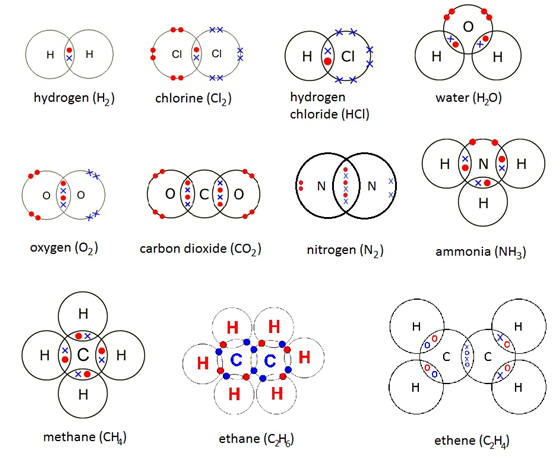
1:46 understand how to use dot-and-cross diagrams to represent covalent bonds in: diatomic ...


Comments
Post a Comment